Multimeter And Oscilloscope Explained: A UK Buyer's Guide
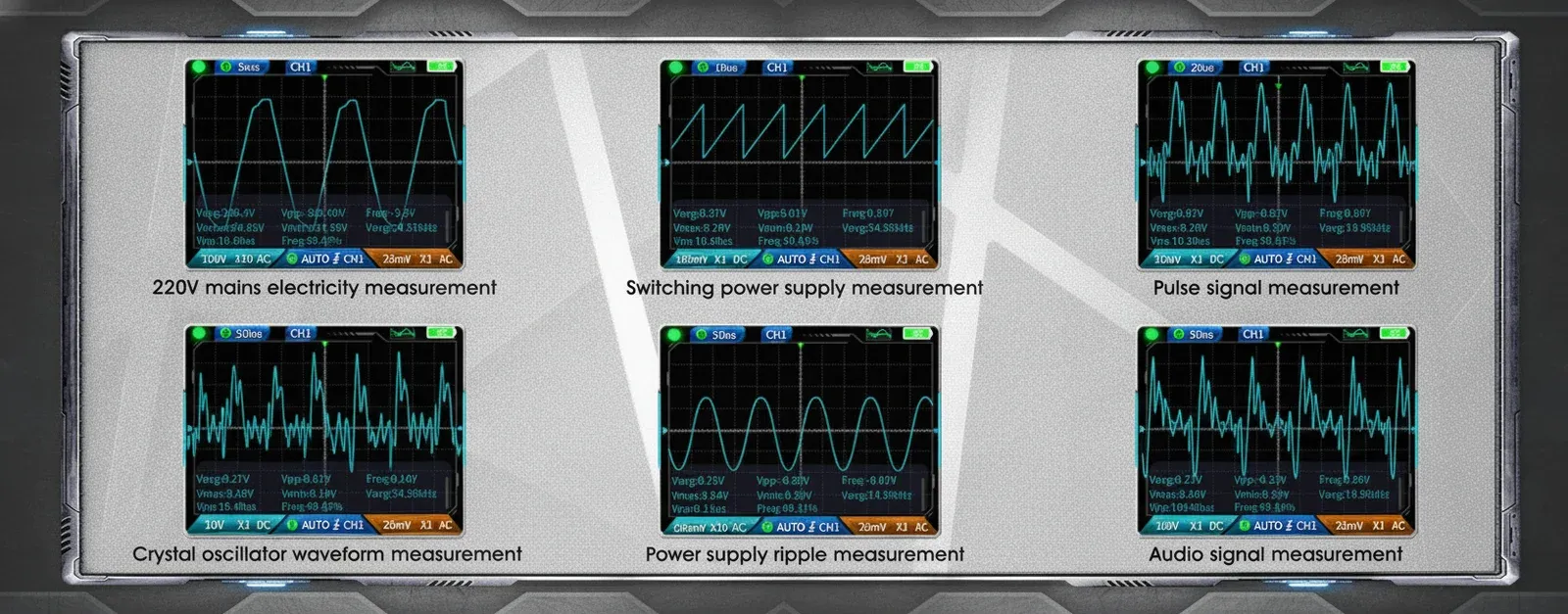
If you are comparing a multimeter and oscilloscope, the short answer is this: a multimeter measures electrical values such as voltage, current and resistance at a given moment, whereas an oscilloscope shows how a signal changes over time. In other words, a multimeter tells you the number present; an oscilloscope shows the waveform behind it.
TL;DR: Use a multimeter for quick checks like voltage, continuity and resistance. Use an oscilloscope when you need to see ripple, spikes, timing issues or unstable signals. For many UK engineers, electricians, maintenance teams and advanced hobbyists, a handheld unit that combines both can save space and speed up fault-finding.
Choosing between these tools is a common sticking point across the UK. Although both instruments measure electrical behaviour, they solve different problems in practice. Therefore, the right choice depends on whether you need a fast numerical reading or a live view of signal behaviour.
Based on our testing of portable diagnostic workflows, many users do not actually need to choose one over the other. Instead, they benefit most from carrying a single handheld instrument that covers routine checks and waveform analysis alike. That is where ScopeGen’s 3-in-1 approach stands out: a 10MHz dual-channel oscilloscope, 9999-count TRMS multimeter and signal generator in one rugged portable unit.
This guide explains what each tool does, when you need each one, how they overlap, and what to look for when buying in the UK market.
Key Takeaways
- A multimeter is best for measuring steady electrical values such as voltage, current, resistance and continuity.
- An oscilloscope is best for visualising changing signals over time, including noise, ripple, spikes and waveform distortion.
- If you need both diagnostics and portability, a combined handheld unit can reduce kit bulk and speed up fault-finding.
- For UK buyers, safety ratings, true RMS performance, portability and practical channel count matter more than headline specifications alone.
- ScopeGen’s integrated device combines a dual-channel 10MHz scope, 9999-count TRMS multimeter and signal generator for field and bench work.
What is a multimeter used for?
A multimeter is an electrical test instrument designed to measure key parameters such as voltage, current and resistance. Most modern digital multimeters also include continuity testing, diode checking and sometimes capacitance or frequency measurement depending on the model.
In everyday UK use, a multimeter is often the first tool reached for when checking whether power is present, confirming a fuse path, verifying battery condition or measuring component values. As a result, it remains fast, familiar and essential for basic troubleshooting.
What is a multimeter best at?
- Measuring DC and AC voltage accurately
- Checking continuity in wiring and circuits
- Measuring resistance across components or paths
- Testing current draw in circuits where appropriate
- Confirming stable values during installation or maintenance work
Why does True RMS matter in the UK?
In the UK, where mains supplies are nominally 230V AC at 50Hz, many real-world loads are not perfectly sinusoidal. Variable speed drives, switched-mode power supplies, LED drivers and industrial control systems can create distorted waveforms. Consequently, a basic averaging meter may misread these conditions. A TRMS multimeter gives more reliable readings on non-sinusoidal signals.
According to common UK testing practice under BS 7671-aligned environments and modern commercial installations, reliable measurement on distorted supplies is increasingly important. That is why ScopeGen’s 9999-count TRMS multimeter specification is especially relevant for professional users.
What are the limits of a multimeter?
A multimeter gives you numbers but not signal shape. If an intermittent fault causes a line to spike briefly or drop out under load, the display may miss it or average it away. Therefore, the reading might look normal while the circuit still fails in operation. That limitation is exactly why oscilloscopes remain indispensable.
What is an oscilloscope used for?
An oscilloscope displays voltage as it changes over time. Instead of showing only a single measured value, it plots waveform behaviour visually on screen. This lets you see frequency, amplitude, pulse width, rise time, ripple, transient events and timing relationships between signals.
If you are debugging electronics rather than simply checking whether power exists, an oscilloscope can reveal faults that no standard meter can expose. For example, it can show unstable clock lines, switching noise from power rails, irregular PWM output or communication errors on digital lines.
What is an oscilloscope best at?
- Displaying waveform shape in real time
- Catching intermittent spikes or dips
- Comparing two signals side by side with dual channels
- Measuring timing events and pulse characteristics
- Troubleshooting analogue and digital electronics more deeply than a meter allows
Why does dual-channel capability matter?
A dual-channel oscilloscope allows you to compare input versus output or monitor two related points simultaneously. In practice this speeds up diagnosis considerably. For instance, you can check whether a signal reaches a component correctly while also viewing how that component responds. Therefore, for portable field diagnostics this feature offers far more insight than a single-channel device.
What are the limits of an oscilloscope?
An oscilloscope is excellent for waveform analysis but less convenient for straightforward electrical checks such as continuity testing or quick resistance measurement. Likewise, it can be less efficient when all you need is a reliable numerical reading from a supply rail or battery pack. In many situations you still want multimeter functionality close at hand.
What is the difference between a multimeter and an oscilloscope?
The simplest distinction is this: a multimeter measures static electrical values efficiently; an oscilloscope shows dynamic electrical behaviour visually.
Multimeter vs oscilloscope: which questions does each one answer?
- Multimeter: “Is there 12V here?”
Ready to streamline your diagnostics with ScopeGen?
Upgrade Your Toolkit — £113.48