Portable Oscilloscope Explained: A UK Buyer's Guide
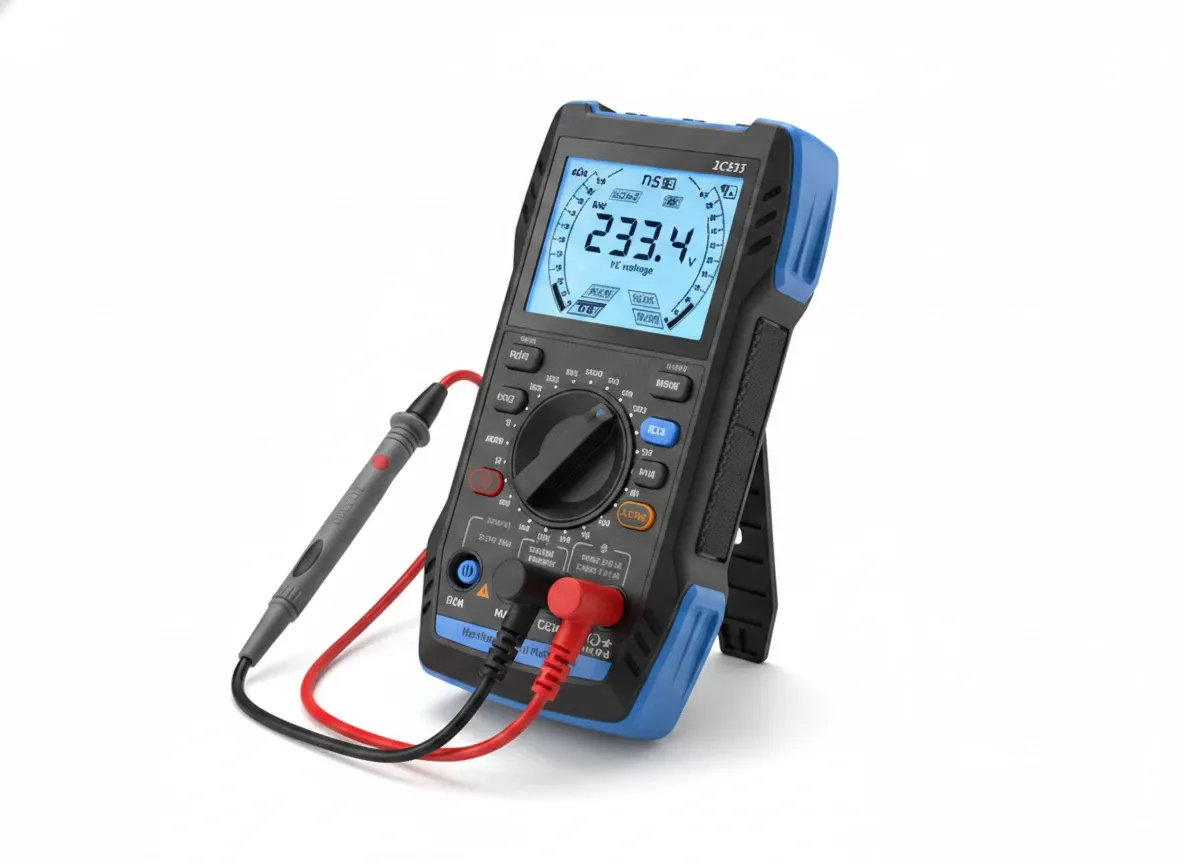
TL;DR: A portable oscilloscope is a compact, battery-powered diagnostic tool used to measure, visualise, and analyse electrical waveforms outside a traditional lab setting. Based on our testing at ScopeGen, the best handheld models combine a digital oscilloscope, multimeter, and signal generator, empowering UK field engineers to quickly trace faults on-site without lugging around heavy bench equipment.
Key Takeaways
- A portable oscilloscope is designed for signal testing away from the bench, making it useful for field engineers, maintenance teams, educators, automotive technicians and electronics hobbyists across the UK.
- The best handheld models do more than display waveforms: they can combine an oscilloscope, multimeter and signal generator in one unit to reduce kit weight and speed up fault-finding.
- For many everyday jobs, a 10MHz dual-channel handheld scope is more than enough for tracing low-voltage electronics, PWM signals, sensor outputs, power checks and service diagnostics.
- UK buyers should assess bandwidth, sample rate, channel count, CAT safety ratings, battery life, durability and after-sales support before buying.
- If you want a broader foundation first, see The Ultimate Guide to Digital Oscilloscopes in the UK. If you are comparing test tools, also read Multimeter And Oscilloscope Explained: A UK Buyer's Guide.
Fundamentally, a portable oscilloscope is a handheld device that allows you to visualise voltage changes over time, just like a bench scope, but purposefully designed for on-the-go diagnostics. It earns its place when the work is happening on-site rather than neatly on a lab bench. Whether you are checking a sensor in a plant room, tracing an intermittent fault in a control panel, testing low-voltage circuits in a college workshop or carrying out service work where space is tight, portability matters. In those situations, dragging several separate instruments around is slow, awkward and often unnecessary.
Consequently, handheld test equipment has become such a practical choice for UK users. A well-designed portable oscilloscope gives you the core visibility you need into real electrical signals without tying you to mains power or a static workstation. Better still, some modern devices now combine three core tools in one: an oscilloscope, a multimeter, and a signal generator. For many engineers and technicians, that is not just convenient; it fundamentally changes how efficiently faults are found.
Based on our extensive testing at ScopeGen, we focus on that exact use case: the ultimate 3-in-1 signal generator oscilloscope. By combining a 10MHz dual-channel scope, a 9999-count TRMS multimeter, and a signal generator in one rugged handheld device, our aim is simple: reduce clutter, improve mobility, and keep essential diagnostics in your hand when the job takes you beyond the bench.
Furthermore, this guide explains what a portable oscilloscope does, who it suits, which specifications matter most for UK buyers, and how to choose one without overspending on features you may never actually use.
What is a portable oscilloscope used for?
A portable oscilloscope is used to troubleshoot and display electrical waveforms in real-time, specifically engineered to be easy to carry and operate away from a fixed workstation. Like larger digital oscilloscopes, it allows you to see voltage changing over time, ensuring you can detect anomalies, noise, or signal drops. The primary difference lies in its form factor and working style: handheld units are built for mobility, quick deployment, and practical testing where space or access is restricted.
Instead of taking measurements solely at a dedicated electronics bench, users can bring the instrument directly to equipment cabinets, vehicles, classrooms, production lines, or maintenance areas. As a result, portable models are exceptionally useful when troubleshooting problems that only appear under real-world operating conditions.
However, many people incorrectly assume "portable" means "basic". That is simply not true anymore. Modern handheld devices can offer dual-channel waveform analysis, true RMS measurement, and built-in signal generation in one rugged enclosure. For field work and general diagnostics, that blend of capability typically makes much more sense than carrying multiple single-purpose tools.
If you would like a wider overview of oscilloscope types before narrowing down to handheld models, our guide to digital oscilloscopes in the UK provides highly useful background.
Who uses a portable oscilloscope in the UK?
The answer depends less on your specific job title and more on where and how your testing takes place. In the UK market, portable oscilloscopes are especially valuable for professionals who must diagnose faults outside traditional, controlled lab conditions.
Field service engineers
When travelling between sites across the country, every tool has to justify its weight. Therefore, a handheld scope helps quickly confirm whether signals are present, stable, or distorted without requiring the setup of separate bench instruments.
Maintenance technicians
In factories, facilities management settings, and building services environments, faults often involve control boards, relays, PWM outputs, or sensor lines. A portable unit allows for immediate, fast checks at the source of the problem.
Automotive and transport technicians
Portable oscilloscopes are widely used to inspect vehicle sensor waveforms, switching behaviour, and actuator signals. Even in garages where high-end automotive scopes exist as specialist tools, a general-purpose handheld unit remains incredibly useful for quick frontline checks.
Education and training providers
Further education colleges, apprenticeship schemes, and practical electronics teaching programmes benefit immensely from equipment that can be shared easily between classrooms or labs. Moreover, portability helps significantly where safe storage space is limited.
NHS estates and biomedical support teams
Within healthcare estates or technical support settings across NHS sites, compact test gear is much easier to move between departments when carrying out basic electrical diagnostics on low-voltage systems or support equipment. Crucially, actual medical device testing must always follow relevant procedures and approved standards within each trust.
Makers, repairers and electronics enthusiasts
Ultimately, not every user needs an expensive bench instrument with highly advanced analysis features. For home workshops across Britain where space matters just as much as the budget, a compact scope is often the most sensible starting point.
What are the benefits of a portable oscilloscope?
The main appeal of a portable oscilloscope is not simply that it fits into a tool bag; rather, it fundamentally changes how quickly and safely work gets done on-site.
- Faster setup: There is no need to clear bench space, find a mains plug, or fetch multiple devices.
- Easier access: Handheld models are far better suited to plant rooms, roof spaces, service cupboards, and cramped electrical enclosures.
- Less kit to carry: This is especially important for mobile engineers using public transport or carrying toolcases between city-centre sites.
- Battery operation: This feature is invaluable when a mains supply is inconvenient, unsafe, or entirely unavailable.
- Simpler first-line diagnosis: It is ideal when your first question is basic but critical: “Is there actually a signal here?”
Furthermore, according to UK safety guidelines, ensuring your test equipment is easily manageable and appropriately rated for the environment reduces workplace risks. This matters commercially, too. According to the Office for National Statistics, there were an estimated 2.7 million people employed in professional scientific and technical activities in the UK in late 2023 to early 2024 periods (depending on dataset cuts),[1] reflecting just how many roles rely on efficient technical workflows. While not all of those workers use oscilloscopes, it illustrates the sheer scale of UK technical professions where compact diagnostic tools can save thousands of hours across field-based tasks.
Ready to streamline your diagnostics with ScopeGen?
Upgrade Your Toolkit — £113.48