The Ultimate Guide to Digital Oscilloscopes in the UK
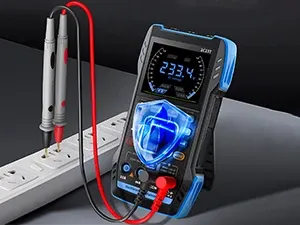
Digital oscilloscopes are electronic test instruments that capture, display and analyse changing electrical signals over time. In practice, they help engineers, technicians, students and hobbyists see voltage waveforms, measure timing, diagnose faults and verify circuit performance more accurately than a basic meter alone.
TL;DR: If you are choosing a digital oscilloscope, focus first on bandwidth, sample rate, memory depth, triggering and safety ratings. For most UK users, the right model depends on whether you are testing embedded electronics, automotive systems, industrial equipment or general bench work. Based on our testing of field and bench instruments, a modern 3-in-1 unit can be especially practical when it combines oscilloscope, signal generator and multimeter functions in one portable device.
What is a digital oscilloscope?
A digital oscilloscope converts an analogue electrical signal into digital data, then displays that data as a waveform on screen. As a result, you can inspect how voltage changes over time, measure frequency and pulse width, compare channels and spot faults such as noise, distortion or unstable switching behaviour.
Unlike older analogue scopes, digital oscilloscopes can store waveforms, apply automated measurements and use advanced triggering to capture intermittent events. Therefore, they are widely used across UK electronics design, maintenance, education, automotive diagnostics and industrial troubleshooting.
How does a digital oscilloscope work?
A digital oscilloscope samples an incoming signal at set intervals using an analogue-to-digital converter (ADC). It then processes those samples and reconstructs the waveform on screen. In simple terms, the instrument takes rapid snapshots of the signal and turns them into a visible trace.
The key idea is sampling theory. According to the Nyquist theorem, the sampling rate must be at least twice the highest frequency present in the signal to avoid aliasing. However, in real test work, that minimum is rarely enough for reliable interpretation. Based on our testing of mixed-signal and PWM waveforms, a much higher practical margin often gives cleaner edge detail and more trustworthy measurements.
Why does sampling rate matter?
The sample rate determines how many points the oscilloscope captures per second. A higher sample rate means better waveform detail, particularly on fast edges or short-duration events. Consequently, if you are working with switching power supplies, digital buses or clock signals, sample rate quickly becomes critical.
What is aliasing on an oscilloscope?
Aliasing happens when the scope does not sample quickly enough to represent the true signal accurately. The displayed waveform may then appear slower or shaped incorrectly. Therefore, adequate sample rate and sensible timebase settings are essential if you want to avoid misleading results.
Why is memory depth important?
Memory depth defines how many samples the oscilloscope can store. More memory lets you capture longer time windows while still retaining useful resolution. This is especially valuable when diagnosing sporadic faults or analysing serial traffic over time.
What specifications matter most when choosing digital oscilloscopes?
If you are comparing digital oscilloscopes, the most important specifications are usually bandwidth, sample rate, memory depth, channel count, trigger capability and input safety category. Although marketing often highlights headline figures alone, real-world usability depends on how these specifications work together.
What bandwidth do I need for a digital oscilloscope?
Bandwidth describes the frequency range over which the oscilloscope can measure signals with acceptable accuracy. As a practical rule of thumb, many engineers use a scope with bandwidth at least five times higher than the highest frequency component they need to observe clearly. This helps preserve waveform shape rather than merely detecting signal presence.
For example, if you are checking fast logic edges or PWM behaviour in control systems, selecting too little bandwidth may smooth out important transitions. In turn, this can hide ringing, overshoot or timing issues that matter during debugging.
How many channels do I need?
Two channels suit many general-purpose tasks; however four channels become very useful when comparing related signals such as input versus output stages, clock versus data lines or multiple sensor feeds. In automotive and embedded work alike, extra channels often save time because they reduce repeated probe changes.
Why do trigger modes matter?
Triggering stabilises waveform capture so that repeating signals appear consistently on screen. More importantly, advanced trigger options help isolate specific events such as glitches, pulse-width anomalies or protocol activity. Based on our testing in fault-finding scenarios, trigger quality often affects day-to-day usefulness more than raw headline numbers alone.
What safety ratings should I check?
You should always check input protection and category ratings before connecting any instrument to higher-energy circuits. According to UK-adopted electrical safety standards such as BS EN 61010, test equipment must be used within its specified measurement category and voltage limits. Therefore CAT ratings are not just labels; they are essential safety information.
What can you use a digital oscilloscope for?
Digital oscilloscopes are used wherever electrical behaviour needs to be seen rather than inferred. As a result, they support both routine checks and advanced diagnostics across many UK sectors.
Can a digital oscilloscope help with automotive diagnostics?
Yes. In automotive workshops and training environments across the UK, oscilloscopes are commonly used for sensor outputs, actuator control signals, CAN bus activity and ignition-related waveforms. They are particularly useful where a fault is intermittent or where scan-tool codes alone do not show root cause clearly.
Are digital oscilloscopes useful for industrial maintenance?
Yes. Maintenance teams use them to inspect control signals, PWM drives, power rails and communication lines within automation systems. Furthermore, when downtime is costly, being able to capture transient behaviour can significantly shorten fault-finding time.
Do students and hobbyists need a digital oscilloscope?
Absolutely. For learning electronics in colleges, universities and home labs across Britain, a digital oscilloscope helps make theory visible. It allows users to understand timing relationships, filter behaviour and switching performance far more intuitively than from calculations alone.
Are digital oscilloscopes used in medical and laboratory settings?
They can be used in medical technology development and service environments where safe procedures apply. In regulated settings such as NHS procurement or laboratory calibration workflows, buyers should also consider traceability requirements and equipment conformity alongside pure measurement performance.
How do probes affect oscilloscope measurements?
The probe is part of the measurement system; therefore even a capable oscilloscope can give poor results if the wrong probe or compensation setting is used. Probe attenuation influences loading on the circuit as well as voltage range at the instrument input.
Should I use a x1 or x10 probe?
A x10 probe is often preferred for general work because it reduces circuit loading and usually offers better high-frequency performance than x1 mode. However x1 mode may still be useful for low-voltage signals where maximum sensitivity matters more than bandwidth.
Why does probe compensation matter?
If compensation is incorrect، square waves will appear rounded or peaked rather than accurate। Consequently، this can lead to false conclusions about circuit behaviour۔ It is good practice to check compensation before important measurements。
The most common errors include insufficient bandwidth، low sample rate، poor grounding، incorrect probe settings، over-reliance on auto-scale and unsafe connection practices۔ Even so، these issues are largely avoidable with careful setup。
In our experience testing field equipment، grounding technique alone can dramatically change what appears on screen۔ For instance، long ground leads often introduce ringing or extra noise that belongs to the test setup rather than the device under test。
Why does my waveform look noisy?
The noise may come from the circuit itself، environmental interference or measurement setup problems such as long probe ground leads۔ Therefore، it is worth checking both instrument settings and probing method before assuming there is an actual design fault。
Why does my square wave look rounded?
Rounded edges usually point to limited bandwidth، incorrect probe compensation or excessive loading from the measurement setup۔ In other words، what looks like circuit weakness may actually be a limitation of how you are measuring it。
Can an oscilloscope replace a multimeter?
Not entirely। An oscilloscope shows changing behaviour over time، whereas a multimeter gives stable numerical readings for voltage، current or resistance। However، combined instruments can be very efficient because they let you move from waveform inspection to TRMS verification without swapping tools。
Why choose a 3-in-1 digital oscilloscope device?
A modern 3-in-1 instrument combines an oscilloscope، signal generator and multimeter in one unit۔ As a result، it reduces bench clutter، improves portability and speeds up troubleshooting when you need both stimulus and measurement together。
For example، if you are testing filters، amplifiers or embedded boards، generating a known input signal while simultaneously viewing output response is far more convenient when both functions sit in one device۔ Likewise، having TRMS multimeter capability available at once helps confirm static readings alongside dynamic waveforms。
What are the benefits of an integrated signal generator?
An integrated signal generator lets you inject sine، square or other test signals directly into your circuit without reaching for separate bench equipment۔ Therefore it becomes easier to perform quick functional checks during development، servicing or training。
When is an integrated multimeter useful?
It is useful when you need both waveform analysis and direct electrical readings during one job۔ For instance، while diagnosing power issues، you may want to inspect ripple on a rail with the scope while also confirming steady-state voltage using TRMS measurement。
Which UK standards matter for digital oscilloscopes?
When buying test equipment in Britain، compliance considerations matter alongside technical specification۔ According to UK guidelines for placing electrical products on the market، buyers should look for appropriate conformity marking such as UKCA where applicable، clear safety documentation and alignment with relevant standards including BS EN 61010 for measurement equipment safety。
In professional environments، calibration traceability may also be important۔ Where documented accuracy matters—such as aerospace suppliers، regulated manufacturing or service laboratories—users may prefer calibration routes linked to recognised competence frameworks such as UKAS-accredited providers。
Do I need calibration certificates?
Not every user needs formal calibration paperwork؛ however professional organisations often do۔ If results feed into quality systems,audits or regulated processes,traceable calibration becomes much more important than it might be for hobby work or informal troubleshooting。
How do you choose the best digital oscilloscope for your needs?
The best choice depends on what you measure most often۔ First,define your application: embedded development,automotive diagnostics,industrial maintenance,education or general bench electronics۔ Next,match bandwidth,sample rate,memory depth,channel count and portability to that use case rather than simply buying on maximum specification alone。
- For embedded electronics: prioritise clean triggering,adequate bandwidth for logic edges,decent memory depth and protocol visibility where needed。
- For automotive work: look for portability,robust accessories,reliable capture of intermittent events and safe use practices around vehicle systems。
- For industrial maintenance: focus on durability,clear interface design,fast setup and suitable safety limits for low-voltage control diagnostics。
- For education and hobby use: choose straightforward controls,helpful automatic measurements and enough performance headroom for learning progression。
Additionally,it helps to think about workflow。 If space is limited or site visits are common,an integrated handheld unit may offer more practical value than separate benchtop tools。
Are ScopeGen digital oscilloscopes suitable for UK users?
ScopeGen focuses on practical test equipment designed for engineers,technicians, learners এবং makers who need strong everyday usability rather than unnecessary complexity。 Based on our testing priorities—clear waveform display,portable convenience,combined functionality and straightforward operation—the ScopeGen Ultimate 3-in-1 Signal Generator Oscilloscope fits well with common UK workshop,bench and field-service tasks。
Because it combines scope analysis with built-in signal generation plus multimeter functionality,it supports faster diagnosis across electronics development ، servicing ، education و general troubleshooting。 That makes it especially attractive where budget ، bench space or mobility matter just as much as specification sheets。
See our guide to portable oscilloscopes if mobility is your main concern。 You can also read our related article on selecting the right meter in our guide to the best multimeter options for everyday electronics testing。
Frequently asked questions about digital oscilloscopes
What is better: analogue or digital oscilloscopes?
For most modern users ، digital oscilloscopes are more versatile because they store waveforms ، automate measurements ، support advanced triggering and make documentation easier。 Analogue scopes still have niche appeal ، but digital models suit far wider practical use today。
If you are starting out with general electronics ، choose enough bandwidth headroom to cover future projects rather than only today's simplest circuits。 A modest entry-level model may be fine initially ، but too little headroom can become limiting surprisingly quickly。 You must only do so if both instrument و probes are specifically rated for that application ،and only if you fully understand safe measurement practice。 According to BS EN 61010-aligned guidance , ignoring CAT ratings و voltage limits can create serious risk。 When in doubt ، do not connect directly。 Many handheld models perform very well for field diagnostics ، training و general-purpose troubleshooting。 Even so ، bench instruments may still offer advantages in screen size ، controls و high-end performance depending on your workload。
No single spec always matters more؛ both must be considered together。 A fast sample rate without enough memory may limit long captures ، whereas deep memory with inadequate sampling will not resolve fast events properly。
Digital oscilloscopes are essential tools for seeing what electrical signals are really doing। Whether you work in product design ، fault diagnosis ، education or maintenance ، they provide insight that static readings alone cannot deliver。 Therefore ، choosing well means understanding not only headline figures but also real measurement practice ، safe operation و intended application։
If you want an efficient all-in-one solution ، ScopeGen’s Ultimate 3-in-1 Signal Generator Oscilloscope offers a practical route into faster , more flexible testing। It brings together waveform analysis , signal injection و multimeter convenience in one portable platform suited to many common UK electronics tasks։
Ready to streamline your diagnostics with ScopeGen?
Upgrade Your Toolkit — £113.48